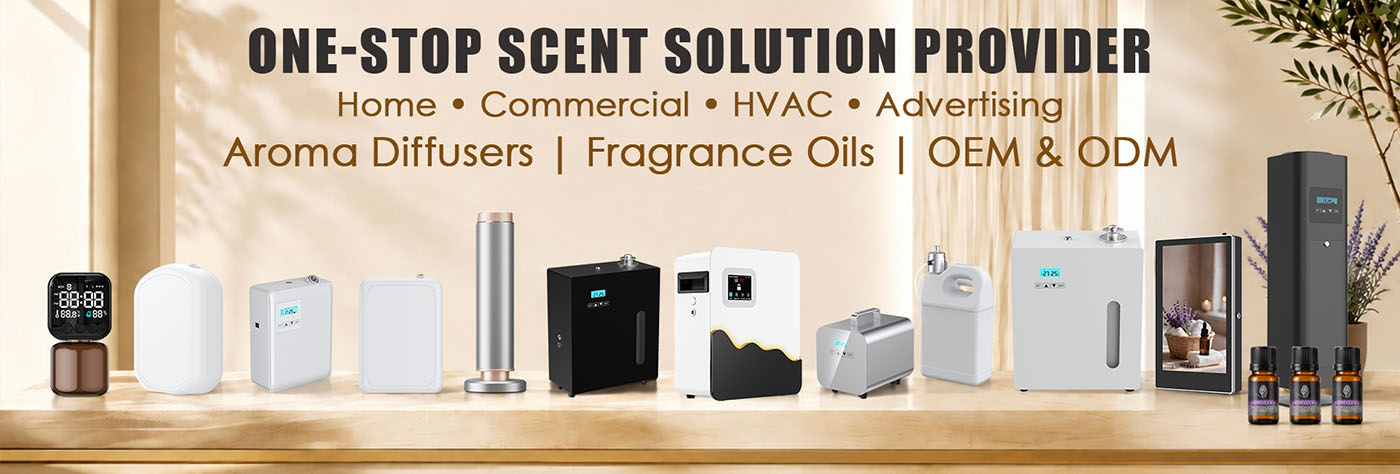
Choosing the right commercial scent diffuser for a hotel, shopping mall, office, retail store, or public facility is not only about fragrance. Buyers also need to compare coverage area, installation method, oil capacity, noise level, power supply, maintenance cost, certifications, and after-sales support. This guide gives procurement teams, distributors, scent service providers, and project managers a practical framework for selecting the right scent diffuser for different commercial spaces. It also explains how SCENTSEA models can be matched with common scenting applications, from compact wall plug-in units to HVAC scent diffusion systems.
What Is a Scent Diffuser?
A scent diffuser, also called a scent machine or aroma diffuser, is an electronic device that disperses fragrance oil into the air to create a controlled ambient scent. Commercial scent diffusers are widely used in hotels, shopping malls, airports, banks, offices, cinemas, retail stores, showrooms, and public restrooms. Most commercial systems use cold air atomization. This technology breaks fragrance oil into fine dry mist particles without heating or adding water, helping preserve fragrance quality while keeping operation clean and consistent. A typical commercial scent diffuser includes an atomizing nozzle, oil bottle or reservoir, pump or fan system, control board, power supply, and housing. Depending on the project, the diffuser may be wall-mounted, plugged directly into a wall outlet, placed on the floor, installed inside an HVAC duct, or integrated with a digital advertising screen.
Why Scent Diffusers Matter for Commercial Spaces
Scent marketing helps create a more memorable and comfortable customer experience. For commercial buyers, a well-selected scent diffuser can support brand positioning, improve the atmosphere of a space, and reduce manual maintenance work when compared with traditional fragrance methods. A suitable commercial diffuser should provide stable fragrance intensity, low energy consumption, easy oil refilling, safe waterless operation, and reliable performance in long-term use. For international buyers, certification and consistent quality control are also essential.
Key Factors to Consider When Choosing a Commercial Scent Diffuser
1. Coverage Area and Space Size
The first step is to match the diffuser coverage with the actual space. Buyers should consider not only the floor area, but also ceiling height, airflow, partitions, doors, and ventilation. Open lobbies, shopping malls, and HVAC systems require stronger diffusion power than small rooms or restrooms.
|
Model
|
Installation Type
|
Coverage
|
Oil Capacity
|
Typical Applications
|
|
S01
|
Wall plug-in
|
30–100 m²
|
150 ml
|
Hotel rooms, washrooms, small offices, beauty salons, home fragrance
|
|
S02
|
Desktop / tower
|
30–100 m²
|
100 ml
|
Hotel rooms, bedrooms, reception desks, small private rooms
|
|
P01
|
Battery operated
|
100–150 m²
|
500 ml
|
Toilets, elevators, corridors, areas without nearby outlets
|
|
P02
|
Electric plug-in
|
150–350 m²
|
300 ml
|
Restrooms, corridors, small commercial areas
|
|
SC19
|
Advertising scent machine
|
150–250 m²
|
500 ml
|
Elevators, retail areas, office lobbies, advertising scenarios
|
|
A300
|
Commercial steel diffuser
|
500–800 m²
|
500 ml
|
Showrooms, offices, stores, studios, medium commercial spaces
|
|
T2
|
Commercial acrylic + steel
|
500–800 m²
|
500 ml
|
Medium commercial scenting projects
|
|
H5000
|
Floor-standing
|
800–1300 m²
|
1000 ml
|
Hotel lobbies, malls, large open areas
|
|
T3
|
Large commercial diffuser
|
1000–1600 m²
|
1000 ml
|
Large halls, event spaces, high-traffic venues
|
|
AC-MAX
|
HVAC split system
|
2500–3500 m²
|
5000 ml
|
Hotels, shopping malls, office buildings, HVAC duct scenting
|
Selection tip: for complex spaces, choose a model with slightly higher coverage than the calculated area, especially when the ceiling is high or airflow is strong.
2. Power Supply and Installation Method
Battery-operated models are useful for elevators, restrooms, corridors, and other places where wiring is inconvenient. Plug-in models are suitable for stable daily operation in small and medium spaces. Floor-standing models are easier to move and work well in open lobbies. HVAC scent diffusers are best for large buildings where fragrance needs to be distributed through the air-conditioning system. For project-based procurement, confirm whether the diffuser needs battery power, Type-C power, AC/DC adapter power, direct wall plug-in operation, or HVAC duct installation. This will avoid installation problems after delivery.
3. Material and Build Quality
Plastic housing is lightweight and cost-effective for home use and light commercial scenarios. Metal housing, including steel or aluminum alloy, is usually preferred for high-traffic public venues because it offers better durability, heat dissipation, and anti-theft performance. For hotels, shopping malls, airports, and office buildings, buyers should pay attention to the housing material, bottle structure, lock design, wall-mounting method, and ease of daily maintenance.
4. Noise Level
Noise level is important in quiet environments such as hotel rooms, lounges, cinemas, spas, offices, and premium retail stores. Compact units are usually quieter, while large commercial machines may have stronger pumps or fans for greater coverage. Before placing a bulk order, ask the supplier for the noise level data and test samples in the target environment.
5. Oil Consumption and Refill Frequency
Oil consumption depends on the pump power, working schedule, fragrance concentration, space size, ventilation, and oil viscosity. A stronger machine may consume more oil, but it may also reduce the number of devices needed for a large area. For scent service providers, oil consumption directly affects operating cost. Smart timing settings, interval control, and proper model selection can help balance fragrance intensity and monthly oil cost.
6. Certifications and Compliance
For international buyers, certifications such as CE, RoHS, and FCC are important for product compliance, customs clearance, and local market sales. Buyers should ask for certificates, test reports, and model matching information before confirming orders. SCENTSEA commercial scent diffusers are designed for international markets and can support buyers with certification documents for qualified models.
7. Smart Control and Maintenance Efficiency
Modern commercial scent diffusers often support timer control, working period settings, intensity adjustment, app control, and multi-device management. These functions are especially useful for hotels, malls, chain stores, and scent service providers managing many units across multiple locations. Smart control can reduce labor work, improve service consistency, and help buyers manage fragrance intensity more precisely.
Step-by-Step Selection Process
1.Measure the target space, including floor area, ceiling height, ventilation, and room layout. 2.Decide the installation method: wall-mounted, plug-in, battery-operated, floor-standing, advertising screen, or HVAC duct integration. 3.Confirm power availability and whether wiring work is acceptable for the project. 4.Compare oil capacity, refill frequency, and estimated oil consumption. 5.Check noise level requirements based on the actual use environment. 6.Verify certifications, warranty policy, spare parts support, and after-sales service. 7.Request a sample and test it with the intended fragrance oil before confirming a bulk order. 8.For OEM/ODM projects, confirm logo, packaging, manual, app customization, MOQ, and production lead time.
Recommended SCENTSEA Models by Application
|
Application
|
Recommended Models and Reason
|
|
Hotel Rooms, Washrooms, and Small Offices
|
S01, S02, P02, and P03 are suitable for small spaces where compact size, low noise, and easy installation are important.
|
|
Retail Stores, Studios, Offices, and Showrooms
|
A300 and T2 are suitable for medium commercial spaces that require stronger diffusion power, stable operation, and a more professional appearance.
|
|
Hotel Lobbies, Shopping Malls, and Large Open Areas
|
H5000 and T3 are better for larger public areas where higher coverage and larger oil capacity are required.
|
|
HVAC Scenting Projects
|
AC-MAX is suitable for centralized scent diffusion through HVAC ducts, especially for hotels, malls, office buildings, and other large commercial projects.
|
|
Advertising and Scent Marketing
|
SC19 combines fragrance diffusion with an 18.5-inch digital advertising screen, making it useful for elevators, banks, office lobbies, malls, and retail promotions.
|
Use Case: HVAC Scenting for a Shopping Mall
For large shopping malls, standalone machines may not be enough to create consistent fragrance coverage across wide open areas and multiple zones. In this type of project, HVAC scent diffusion is often a more efficient solution. A scent service provider can install multiple AC-MAX HVAC scent diffusers across different duct zones and manage working schedules based on business hours, customer flow, and fragrance intensity requirements. Compared with manual fragrance methods, centralized control and longer refill intervals can reduce maintenance work while improving scent consistency. For similar projects, buyers should confirm duct structure, airflow direction, installation position, fragrance oil viscosity, monthly refill plan, and whether app or remote control is needed.

Frequently Asked Questions
1.What is the difference between a scent diffuser and a humidifier?
A commercial scent diffuser is designed to diffuse fragrance oil into the air, usually without water or heat. A humidifier is designed to add moisture to the air and is not optimized for long-term commercial fragrance diffusion.
2.Can I use any fragrance oil in a commercial scent diffuser?
It is recommended to use high-quality waterless fragrance oil suitable for nebulizing diffusers. Oils with unsuitable viscosity or impurities may affect atomization performance or cause nozzle clogging.
3.How do I choose the right coverage area?
Start with the actual room size and then consider ceiling height, airflow, doors, partitions, and ventilation. For high ceilings or strong ventilation, choose a model with higher coverage or use multiple units.
4.What should I check before placing a bulk order?
Buyers should check product specifications, certifications, sample performance, oil consumption, warranty, spare parts support, packaging, lead time, and the supplier’s OEM/ODM capabilities.
5.Does SCENTSEA offer OEM/ODM support?
Yes. SCENTSEA supports logo printing, custom packaging, user manuals, and product customization depending on the model and order quantity.
6.How can I reduce fragrance oil consumption?
Use proper working schedules, avoid over-scenting, select the right model for the actual area, and test different intensity settings. Smart timer control can help balance fragrance performance and oil cost.
Conclusion
Selecting the right commercial scent diffuser becomes much easier when buyers compare the key factors: coverage area, installation type, material, noise level, oil consumption, certifications, smart control, and after-sales support. SCENTSEA provides a full range of commercial scent diffusers for small rooms, washrooms, offices, retail stores, hotel lobbies, shopping malls, and HVAC scenting projects. Whether you need a compact wall plug-in diffuser, a professional commercial scent machine, or an HVAC scent diffusion system, SCENTSEA can help match the right model to your project requirements.





 Chat Now
 Chat Now
 Email Us
 +8619928719703